
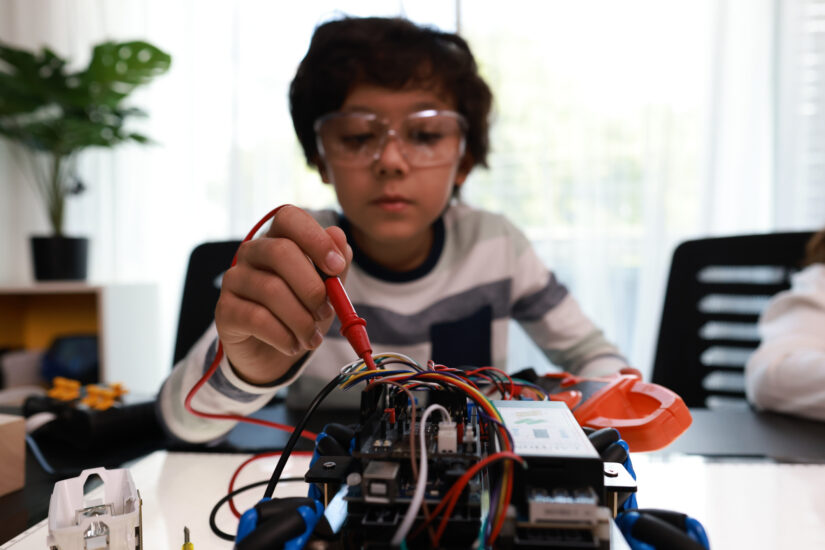
Hands-on learning can help you improve both memory and understanding by making learning more engaging and meaningful. Studies have shown that students often learn more effectively when they are actively involved in the learning process rather than simply reading or listening.
This approach can help lessons feel more interesting and memorable while making it easier to understand and remember important ideas. It can also increase confidence and involvement in learning over time. Because of these benefits, hands-on learning is widely recognised as a key way to support deeper understanding and stronger long-term knowledge retention across many subjects.
In this post, we’ll explore why hands-on learning is so effective.
- Encourages Active Participation in Learning
Learning changes when you are part of it rather than just receiving it. Instead of information flowing one way, you are required to think, respond, and interact with what is being taught. That involvement keeps attention sharper and ideas clearer, because your brain is processing rather than drifting. For example, a student studying history might recreate a timeline by placing events on a physical or digital map, actively deciding where each moment belongs rather than simply reading a list of dates.
- Connects Learning with Experience
Ideas tend to make more sense when they are tied to something you have actually done or observed. Without that connection, information can feel distant or harder to hold onto. Experience gives learning context, which helps the brain store it more effectively. Think about a student learning fractions by measuring ingredients for a simple recipe. Seeing how halves and quarters relate to a whole makes the concept click in a way that a textbook explanation often cannot.
- Builds a Deeper Understanding of Concepts
There is a difference between knowing something and understanding it properly. Hands-on learning pushes you past surface-level recall and into figuring out how ideas fit together. This kind of learning takes more thinking at the start, but it pays off when you can apply knowledge in new ways. Building a simple circuit from a battery, wires, and a globe, for instance, teaches cause and effect in a way that memorising a diagram simply does not.
- Makes It Easier to Recall Information Later
Memory is stronger when it has been used rather than simply reviewed. When you engage with information during learning, your brain stores it in a way that is easier to access later. That is why people often remember what they have done more clearly than what they have read. A student who has acted out a scene from a novel during class is far more likely to remember the characters’ motivations than one who only read the passage silently.
- Creates More Meaningful Learning Experiences
Some learning stays with you longer because it feels like something you were part of, not just something you were told. When you are involved in the process, ideas tend to feel more relevant and less abstract, making study feel more worthwhile and easier to remember. Conducting a simple water filtration experiment, for instance, transforms an abstract environmental science concept into something a student can see, test, and draw real conclusions from.
How Tutor Doctor Improves Comprehension and Retention
At Tutor Doctor, improving retention and comprehension is a major focus of our approach to learning. We prioritise strategies that help students actively engage with material so they can process information more deeply and build a stronger understanding.
This approach supports clearer recall and reduces reliance on short-term memorisation. By guiding students to work through concepts rather than simply review them, we help develop lasting knowledge, stronger thinking skills and greater confidence when applying what they have learned across different subjects and learning situations.
Contact us for a free consultation!