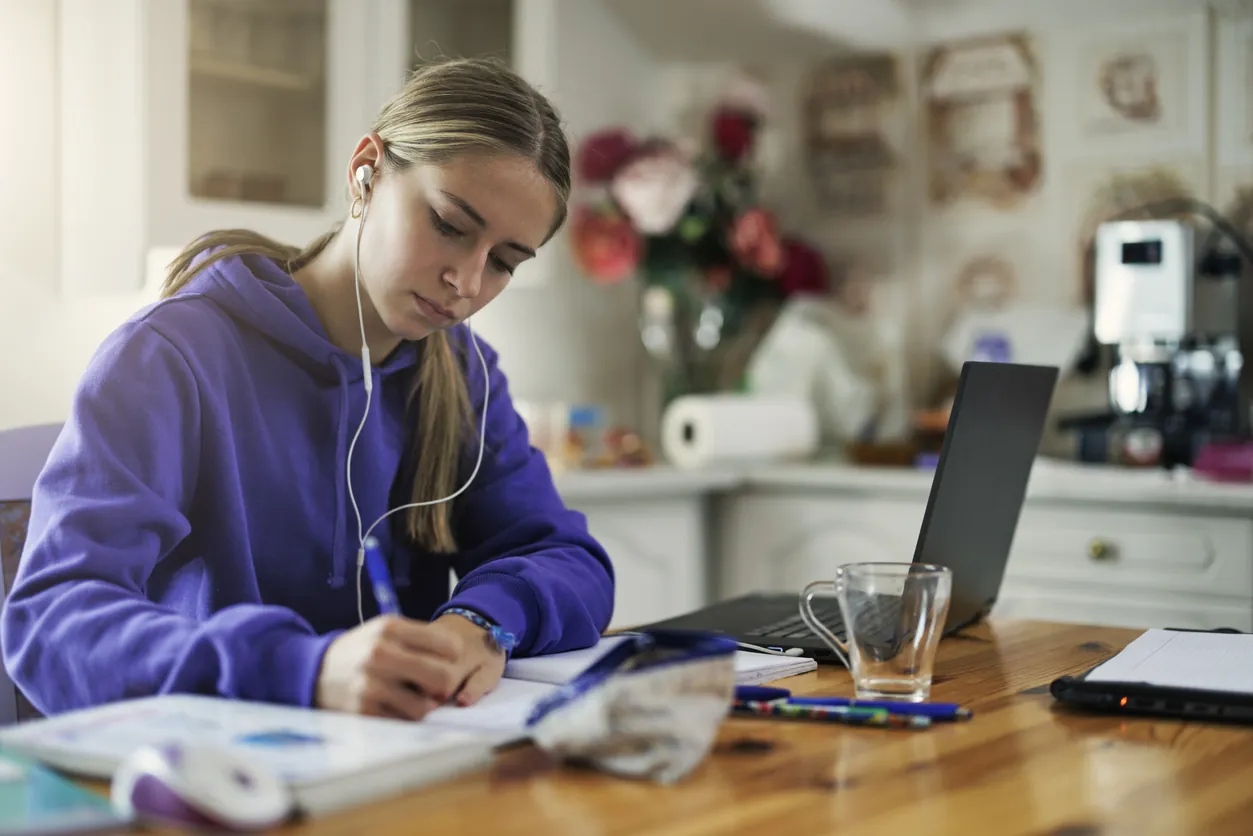
Proofreading helps students communicate their ideas clearly and feel more confident about the work they hand in. Spelling mistakes, missing punctuation, unclear sentences, and rushed formatting can all affect how a teacher reads an assignment.
For parents, helping a child develop a reliable proofreading routine can be more useful than simply correcting mistakes for them. With a simple checklist, students can learn what to look for each time they finish an essay or other written piece of work, gradually becoming more confident and independent in checking their own writing.
This practical checklist can help your child catch common mistakes and feel more confident checking their own work.
- Read Slowly and Aloud
Rushing through an assignment makes it much easier to overlook small mistakes. Encourage your child to slow down and read each sentence aloud. Hearing the words forces them to process every one rather than letting their eye skip ahead, which gives them a better chance of spotting errors they may otherwise miss.
- Make Sure Each Sentence Is Clear
Students should be able to read each sentence and understand exactly what it means. If a sentence sounds confusing, awkward or incomplete, it may need some attention. Encourage your child to rewrite unclear sentences rather than assuming the reader will understand what they meant.
- Watch for Missing Words
When students know what they intended to say, their brains can sometimes fill in words that are missing from the page. Reading each sentence carefully can reveal these omissions. One way to catch them is to read sentences out of order. This makes it harder for the brain to skip over a gap without noticing.
- Look Closely at Spelling
Spelling mistakes can slip through even when students know the correct spelling. Ask your child to pay particular attention to unfamiliar words and words they often confuse. A dictionary can help when they are unsure, rather than simply guessing or relying on spellcheck.
- Pay Attention to Punctuation
Full stops, commas, apostrophes and quotation marks help make writing clear. Encourage your child to check that sentences end with the right punctuation, commas are used appropriately and apostrophes show possession or missing letters. If they are unsure, they can check a punctuation guide or ask for help.
- Focus on Grammar
Grammar errors can distract readers from otherwise strong ideas. Students can look at whether their sentences are complete, subjects and verbs agree, and words such as pronouns are being used correctly. Over time, regularly noticing these patterns can help students become more confident writers.
- Keep Verb Tenses Consistent
Switching between past and present tense can make writing confusing. Ask your child to consider when the events or ideas they are discussing happened, then make sure the verbs reflect that timeframe. Changes in tense should have a clear purpose rather than happening accidentally.
- Make Sure Ideas Connect
Good proofreading also involves looking at the bigger picture. Students should consider whether their paragraphs are in a sensible order and whether one idea leads naturally to the next. If something feels out of place, they may need to move, remove or rewrite part of it.
- Compare It With the Task
Before handing in an assignment, students should return to the original question or instructions. This gives them an opportunity to make sure they have addressed every part of the task and included anything specifically requested, such as examples, references, headings or a particular word count.
How Tutor Doctor Develops Proofreading Skills
At Tutor Doctor, we help students develop proofreading skills by teaching them practical strategies they can use independently. Our tutors work with students to identify common errors, slow down their reading, and review their work systematically.
Rather than simply correcting mistakes, we encourage students to understand why an error occurred and how to recognise similar issues in future assignments.
Contact us for a free consultation.